Sunday, June 24, 2012

Life of Pi: Chapters 15-16

http://3.bp.blogspot.com/-47weGt-LSg4/TgMzx0zQR4I/AAAAAAAACU8/xS_fVDDSDSI/s1600/Lord-Ganesha-New-Wallpapers-3.jpg
Above is the image of Ganesha -- he of the animal head -- the most popular image of the Hindu deities.

Interesting that the narrator (still don't know who that is in these sections) describes the house of his host as a "temple" and the host's kitchen as a "shrine." What do you make of all the religious icons to be found here?

Ganesha is the lord overcomer of obstacles, the god of good luck, the god of wisdom, and the patron of learning. Sounds like a good god to have on your side...but why does he travel on a rat? What is significant about that?

Although the house if filled with Hindu religious icons, these icons are juxtaposed with Christian icons. Why do you think this man has both so significantly displayed in his home?

As for the italicized sections, I have a theory at this point...the narrator of these sections is visiting an older version of Pi. Just a guess, and I can't tell you how I came to think this, but I can sense it...

Explain the message in the story about the dancing girls more clearly and with more detail than the narrator. In other words, what was the point of the story?

"...Hindus, in their capacity for love, are indeed hairless Christians, just as Muslims, in the way they see God in everything, are bearded Hindus, and Christians, in their devotion to God, are hat-wearing Muslims." What is the narrator suggesting here? [Warning: I am not asking for your religious opinions or a religious debate here...hold onto those thoughts...what I am asking for is a straightforward interpretation of the statement quoted above.]

Assume that it is possible for you to change religious beliefs...such as going from believing Christian teachings to believing Hindu teachings. For the sake of argument, just assume that's possible for you. Making the assumption that it is possible, what would it take for you to make that change? How long would it take to make a core value switch like that in your life?

Life of Pi: Chapters 13-14

 http://wallpapers-catalog.com/animal-wallpapers-lion-tamer-ate%20.1920x1200.jpg  
Guess someone didn't get the memo about establishing dominance...

Of the many times I've fallen into a lion's pit and been torn to pieces, I never once thought about why the lion did it...

Interesting insight into lion training here...the narrator tends to lean on anthropomorphism a lot in this section. Does that take away from his role as an expert in this case?

Again, a kind of symbolic parable about humans as much as it is a section on animal behavior...what does your crazy English teacher mean by this?

Life of Pi: Chapters 11-12

https://blogger.googleusercontent.com/img/b/R29vZ2xl/AVvXsEj5R5lc95VlI6b6HrR2aMcP4GLNgIrzyyZLV21085bB8CNJfHGfP5Rm-0mj9tXdGGFkb4yhHssmfSDMJL5v2hB8nJw9TAtPd2TFRKo9Org3QS0wEiGEVnGJmW_YJOSl-Rk0jUxFpQ/s1600/black-panther-In-India.jpg
What is the narrator's underlying message in his story about the black leopard?

I don't understand the end of Chapter 11...what is the narrator talking about? How did we go from Tokyo to Mexico? Baffled...

Chapter 12 is italicized again...who is narrating these sections? Who is the old man that is cooking for his visitor? And who is Richard Parker? The mystery continues...

Thursday, June 21, 2012

Life of Pi: Chapters 9-10

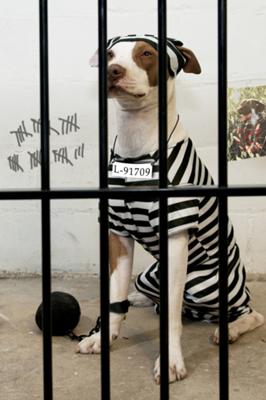
http://www.the-proper-pitbull.com/images/the-jail-break-artist-jailed-prisoner-costume-21406946.jpg
Small note...but interesting to ponder...the narrator measures flight distances in yards, not meters...

Interesting notes on flight distances, just the same. I would like to know how -- specifically -- they reduce that distance for zoo life.

Which animals multiplied to excess?

"...the animals don't escape to somewhere but from something." Aren't humans the same? Isn't this one of the animal traits that humans have retained despite civilization?

How might you explain that Chapter 10 has some qualities of a fable?

Life of Pi: Chapters 7-8

http://caitlinlyons.edublogs.org/files/2009/04/africa-four-030.jpg
After all of the religious allusions, it is interesting that one of his most memorable teachers is Mr. Kumar, an avowed atheist. Also interesting is Mr. Kumar's view that the animals at the zoo proved the scientific order of things...this is not the wonder and awe that zoos usually produce in their visitors. He also refers to it as his temple. Why?

Perhaps most interesting is that the narrator views atheism as a religion of a different sort. How can this be true? What does he mean when he says, "Like me, they go as far as the legs of reason will carry them -- and then they leap"?

What is wrong with people? Why would you want to hurt zoo animals?

Thoughts on the goat scene?

With the exception of the guinea pigs, the narrator's father simply tells of the dangers the other animals are capable of...why start with the excessively violent scene with the tiger? Why would he do this to his sons? Why not just tell them like he did with the other animals?

Monday, June 18, 2012

Life of Pi: Chapters 5-6

http://www.ilikepi.com/files/8712/7747/5473/pi_logo.gif
I wonder why, when discussing name changes that go beyond just name changes, the narrator refers only to Biblical names/lives that were changed...and then, when comparing his persecution (Pissing) and his resulting desire to leave St. Joseph's, he compares himself to Muhammad in Mecca...

Again, I am not sure about the reason for the italics in Chapter 6...or who might be narrating it...or who the subject of the chapter is...but I will come back to this chapter once I have a stronger idea of these things. I am assuming it will be made clear.

Life of Pi: Chapters 3-4

http://www2.archi.fr/DOCOMOMO-FR/Images/piscine-molitor.jpg
I will never swim in a European pool...I will never swim in a European pool...I will never swim in a European pool...

Why name a child after a pool? Unless he was conceived there or his parents experienced some amazing event there, I don't see why they would name him that.

Search Engine Fun for the Day: Find Pondicherry on a map of India.

I have gone back to the place where I grew up -- a farm with 40 acres of woods with a pond, a creek, and a deer-infested marsh. When I go there now, it amazes me how small 40 acres is. Ever experienced this phenomenon?

I like the comparison between the hotel business and the zoo business. Made me chuckle. Anyone with me?

How cool would it be to grow up in a zoo? That would be awesome. Anyone grow up somewhere cool like that?

Starting on page 16 (at least of my version), the narrator begins to pontificate on the idea of freedom. Do you agree with his assessment of the animals' freedom? Is there something missing in his argument that animals are better off in a zoo? Can you poke holes in his argument, or have you been thoroughly convinced by his logical explanation?

He mentions that religion has its own issues with freedom. What does he seem to be suggesting by this?


Tuesday, June 12, 2012

Life of Pi: Chapters 1-2

http://www.creationtips.com/Pix/sloth_three-toed.jpg

Author John Irving, writer of A Prayer for Owen Meany, has an interesting take on first sentences of novels. In his introduction to the aforementioned novel, Irving writes that "the primary function of a first sentence is to make you keep reading." Does the first sentence of this novel accomplish that? If so, what is it about the sentence that makes you want to keep reading?

What is the cosmogony theory of Isaac Lutia? With the advent of the internet, finding out about these allusions is extremely easy, so don't let them pass you by when you have time to look them up. They could lead you down paths you never thought would have existed. So who is this guy and what is so important about his theory?

What is the connection between religion and zoology? Why choose this double major?

indolence...definition?

What is the purpose of the three-toed sloth? The narrator sure spends a lot of time on it...

In speaking of the sloth, the narrator states that he felt like he "was in the presence of an upside-down yogi deep in meditation or a hermit deep in prayer." Others say sloths smile. Why does the narrator not want to project human traits on the animal but chooses to project spiritual traits on it?

What is a "memento mori painting"? How is it significant?

Who is Richard Parker?

Why is the waiter's comment concerning the narrator ("fresh off the boat" so disturbing to the narrator?

Why is Chapter 2 written in italics? To whom is it referring?


Monday, May 21, 2012

Examples from Class May 21


Using a colon (he said "colon"...teehee):

Much has already been done to ensure that stem cell research is used in the future: “Congress twice passed the Stem Cell Research Enhancement Act with strong bipartisan support and both times President Bush vetoed the bill (Smith 24).

Integrating into a sentence:

Stem cell research has already received “strong bipartisan support” (Smith 24).

Paraphrasing:

I am paraphrasing about stem cells here. The research has gotten strong support from both major parties at this point (Smith 24).

Using colon for large block quote: 

This is important info on stem cells:
Congress twice passed the Stem Cell Research Enhancement Act with strong bipartisan support and both times President Bush vetoed the bill. President Barack Obama lifted the restrictions on federal funding for ESCR on March 9, 2009 by an Executive Order. Research!America issued a statement commending this action.
Prior to President Obama's Executive Order, federal funding was limited to those lines created before August 9, 2001, as directed by President George W. Bush. Legislation will be necessary to ensure that a future president cannot reinstate similar restrictions by Executive Order. (Smith 24)
This was done…

According to...

According to Harvard professor Jimmy Smith, “Prior to President Obama's Executive Order, federal funding was limited to those lines created before August 9, 2001, as directed by President George W. Bush. Legislation will be necessary to ensure that a future president cannot reinstate similar restrictions by Executive Order” (24).